The Best Pillow for Neck Pain: Why Cervical Support Changes Everything
By Deep Rest Reviews Team · March 15, 2026
Disclosure: We earn a commission when you purchase through the links on this page. This does not affect the price you pay or our editorial independence. Full disclosure
If you wake up with a stiff neck, tension headaches, or numbness in your hands, the problem may not be how you sleep — it may be what you sleep on. Most standard pillows leave a critical gap between your neck and the mattress, and that gap may be at the root of your morning discomfort.
Understanding this mechanism — what sleep specialists call the "cervical gap" — changed the way we evaluate pillows. Once you see why it matters, you may never look at your pillow the same way. If you already know what you're looking for, check current availability and pricing here.
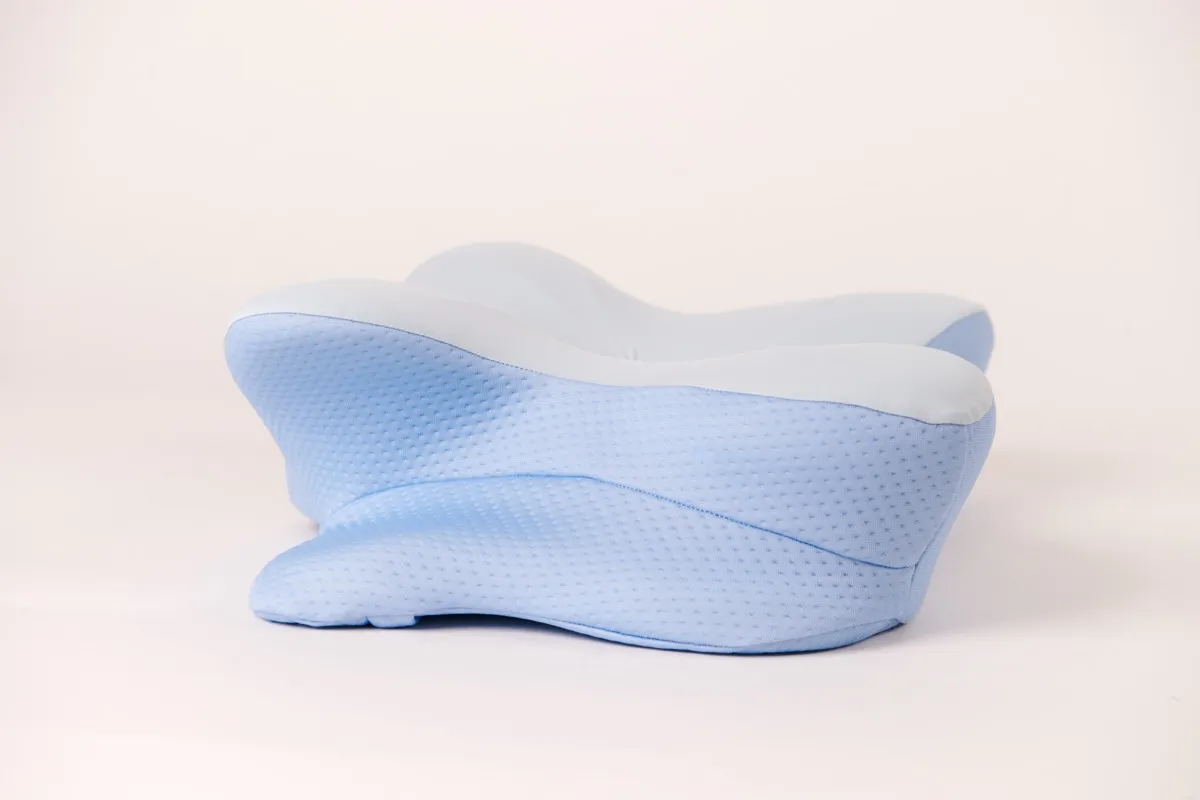
An ergonomic butterfly-contour pillow designed to fill the cervical gap that may contribute to morning neck stiffness.
See Today's Price →How Poor Pillow Support Affects Your Neck
Your cervical spine — the seven vertebrae in your neck — has a natural forward curve that needs to be maintained during sleep. When you lie down on a standard pillow, the pillow compresses under your head but offers little support beneath the curve of your neck. This creates a gap — the cervical gap — where your neck is essentially unsupported.
When that gap exists, your cervical vertebrae may drift out of their neutral alignment. Over the course of a night, this misalignment may compress the nerve pathways surrounding the spine. Sleep specialists note that sustained poor cervical alignment during sleep may contribute to disc degeneration and reduced range of motion over time.
The downstream effects can be wide-ranging: morning stiffness that takes hours to fade, tension headaches that start at the base of the skull, numbness or tingling in the hands and arms, and chronic muscle tension through the shoulders and upper back. Traditional pillows also tend to flatten under head weight overnight — what starts as a comfortable height at 10 PM becomes an unsupportive surface by 3 AM.
What to Look for in a Cervical Support Pillow
When evaluating pillows for neck comfort, we focused on criteria based on sleep posture principles:
- Contoured design — a raised edge to fill the cervical gap and a recessed center to cradle the head
- Memory foam density — firm enough to maintain shape all night, yet soft enough to feel comfortable
- Multi-position support — works for back sleepers and side sleepers without constant adjustment
- Breathability — ventilation channels or cooling materials to prevent heat buildup
- Washable cover — a removable, machine-washable cover for hygiene and convenience
How Ergonomic Pillows Compare
| Feature | Regular Pillow | Ergonomic Contour Pillow |
|---|---|---|
| Cervical gap support | None — head sinks flat | Butterfly wings fill the gap |
| Sleep positions | Usually suits 1–2 positions | Dual-height design for side and back |
| Material durability | Flattens within months | Slow-rebound foam maintains shape |
| Spinal alignment | Depends on pillow height | Contoured to support natural neck curve |
| Trial period | Store return policy varies | 60-day money-back guarantee |
Why Standard Solutions Fall Short
You may have already tried other memory foam pillows, cervical rolls, or adjustable-loft pillows. The challenge is that most of these still leave the critical cervical gap unsupported — they address firmness or height but not the contoured shape your neck needs. A flat memory foam pillow may feel softer, but it compresses the same way as any other flat surface. A cervical roll helps at one angle but shifts out of place when you move during the night.
Featured Review: Ergonomic Contour Memory Foam Pillow
This is where the butterfly contour design takes a fundamentally different approach. Rather than relying on a single flat surface, it uses a sculpted shape built around the cervical gap problem:
- Dual-height neck rolls — a higher side designed for side sleeping and a lower side for back sleeping, so you can simply flip the pillow to match your position
- Arm cutouts — the butterfly wings reduce shoulder pressure for side sleepers, allowing your shoulder to tuck in without creating a new pressure point
- Center depression — a recessed cradle for your head that helps maintain a neutral spine position throughout the night
The slow-rebound memory foam conforms to the unique shape of your head and neck, distributing pressure evenly rather than creating a single point of contact. Unlike standard memory foam that tends to flatten after a few hours, this foam is designed to maintain its structural support consistently through the night.
Compare that to the average $3,000+ Americans spend annually on chiropractic visits for neck-related issues. A one-time investment in proper sleep posture support is a fraction of the cost.
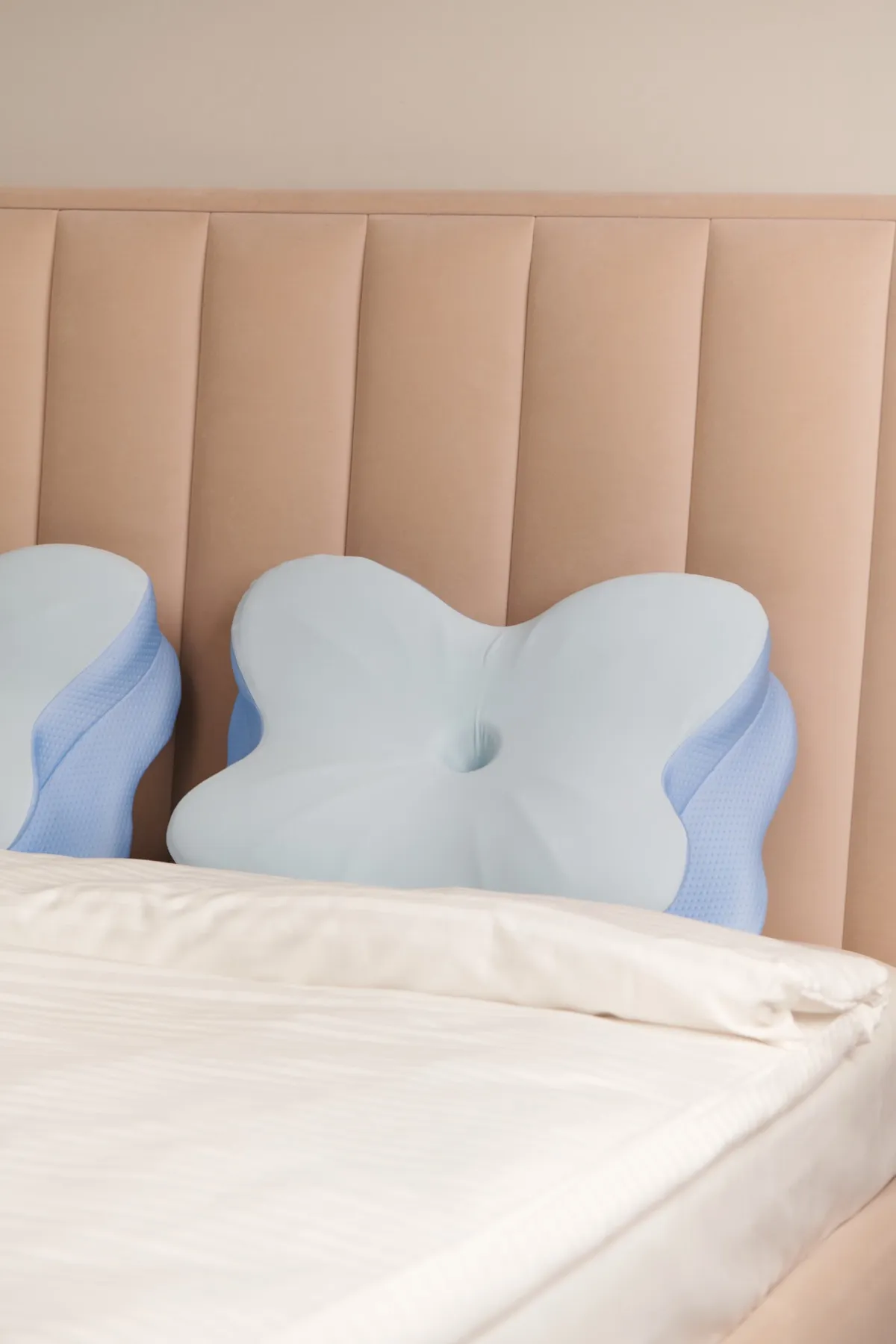
Key Features
- Fills the cervical gap flat pillows miss— contoured butterfly wings support the neck's natural curve, designed to keep cervical vertebrae in neutral alignment
- Maintains support all night — slow-rebound memory foam is engineered not to flatten at 3 AM, providing consistent support from the moment you lie down until morning
- Breathable design prevents overheating — ventilated foam with airflow channels helps regulate temperature for uninterrupted sleep
Pros and Cons
Pros
- Pro: Fills the cervical gap that standard pillows miss
- Pro: Dual-height design works for side and back sleepers
- Pro: Slow-rebound memory foam maintains support all night
- Pro: Breathable, removable cover for easy washing
- Pro: 60-day risk-free trial
Cons
- Con: Takes 3–7 nights to fully adjust
- Con: Not ideal for stomach sleepers
- Con: Only available online (not in stores)
- Con: One size — may not suit every body frame
Who Should Consider This Pillow
This pillow is designed for anyone who experiences neck stiffness or discomfort upon waking. It may be particularly helpful for:
- People who wake up with neck stiffness or tension headaches
- Side sleepers who need extra height to keep their spine aligned
- Back sleepers looking for gentle cervical support without excessive loft
- Anyone looking to support long-term neck comfort and sleep posture
It may not be the best fit for stomach sleepers, as the contoured design is optimized for back and side sleeping positions. If you primarily sleep on your stomach, a flatter pillow would be more appropriate.
The Bottom Line
Neck discomfort from poor sleep posture is one of those problems that seems minor until it starts affecting your daily life — your focus, your mood, your energy. The right pillow will not magically solve chronic conditions, but addressing the cervical gap can make a meaningful difference in how you feel each morning.
This ergonomic contour pillow stands out because it addresses the root mechanism — the unsupported cervical gap — rather than just adding more padding. The dual-height butterfly design makes it versatile across sleeping positions, the memory foam core holds its shape reliably, and the 60-day guarantee means you can try it with confidence.
If you have been dealing with morning neck stiffness and suspect your pillow is part of the problem, this is the one we would suggest trying first.
Frequently Asked Questions
How long does it take to adjust to a contour pillow?
Can this pillow help with shoulder pain too?
What is the return policy?
Does the pillow sleep hot?
Is this pillow suitable for stomach sleepers?
Individual results may vary. This product is not intended to diagnose, treat, cure, or prevent any disease.
ClickBank is the retailer of products on this site. CLICKBANK is a registered trademark of Click Sales, Inc., a Delaware corporation located at 1444 S. Entertainment Ave., Suite 410, Boise, ID 83709, USA and used by permission.